Operations
Reduce the chance that pest activity interferes with day-to-day business.
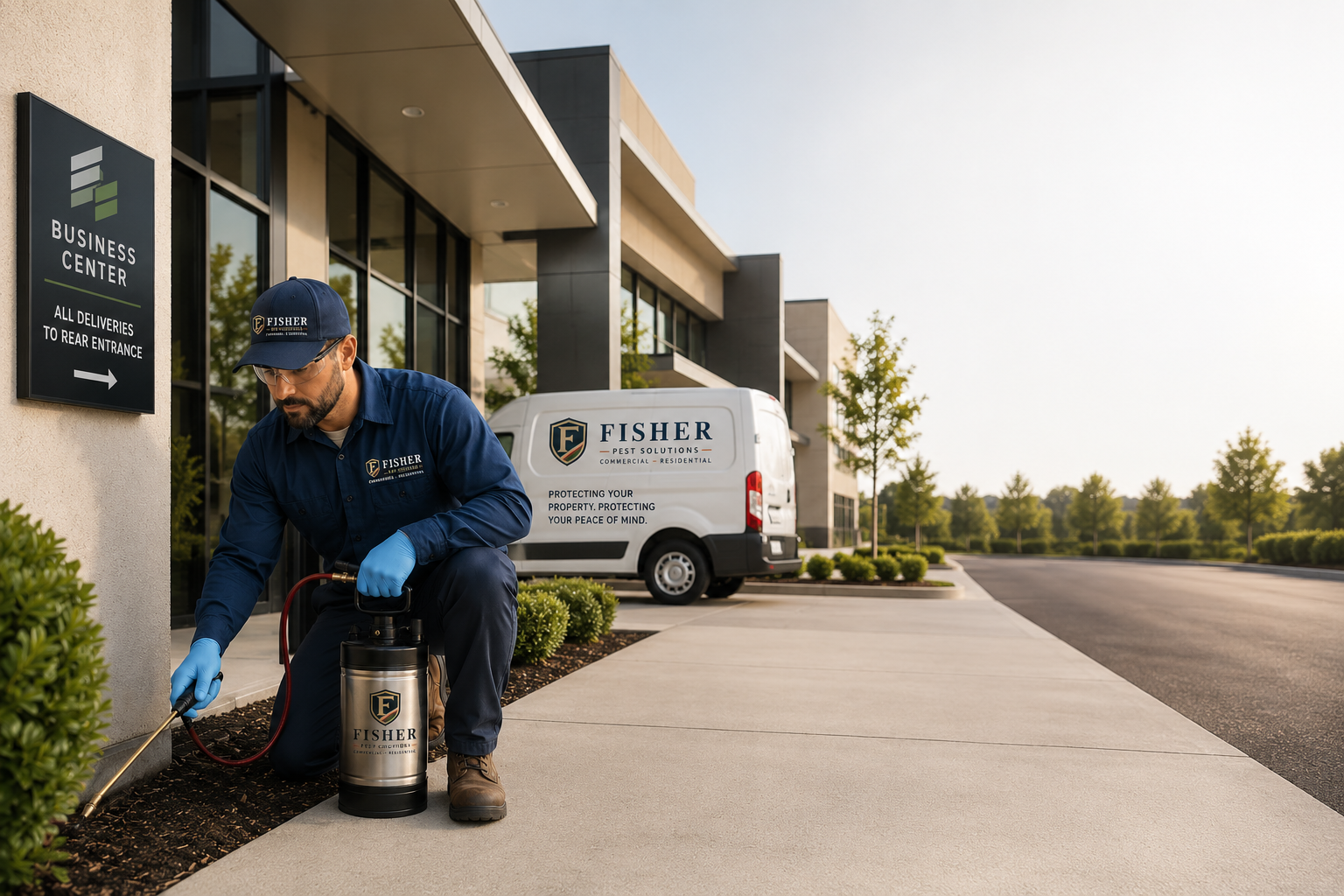
Pest problems in a commercial property can affect far more than the building itself. They can disrupt operations, concern employees and customers, damage inventory, and put your reputation at risk.
Fisher Pest Solutions provides commercial pest control for businesses throughout Rutherford County and Middle Tennessee communities. We build our service around the property, the pest pressure, and the needs of the business — not a one-size-fits-all treatment plan.
Commercial Pest Management
Why Proactive Pest Management Matters
Pest problems in a commercial property can affect far more than the building itself. They can disrupt operations, concern customers and employees, damage inventory, and put your reputation at risk.
Reduce the chance that pest activity interferes with day-to-day business.
Protect the environment and experience customers associate with your business.
Maintain a cleaner, more comfortable workplace for the people who work there.
Help protect stored products, materials, and equipment and against introduction of pests.
Address issues before they become visible business problems.
A Proactive Approach
A commercial pest program should do more than respond when something appears. We continually assess the property, the pest pressure, and the conditions behind it so service can stay focused on both current activity and long-term prevention. It needs to take into account the environment around the property, nature of the business, and individual needs that are always unique to that location.
Identify pest activity, entry points, harborage, and contributing conditions.
Build the service approach around the property, activity, and operational needs.
Target active and high-pressure areas with deliberate, appropriate treatments.
Watch for recurring activity and changing conditions over time.
Explain what we find and recommend practical steps that can improve long-term results.
Built Around the Property
Commercial pest management should reflect the way a property is built, used, and operated. Different environments create different conditions, access points, and areas of recurring pest pressure.
Food, moisture, deliveries, waste areas, and frequent traffic can create persistent pest pressure around a restaurant. A commercial program needs to consider both customer-facing areas and the less visible spaces where activity often begins. Sanitation and plumbing are potential problem areas that require special attention.
Common Pressure Areas
Large facilities can experience different pest pressures around receiving areas, loading docks, stored materials, employee spaces, and building perimeters. Pest management needs to account for how products and people move through the property.
Common Pressure Areas
Manufacturing properties can combine production areas, storage, shipping, employee spaces, and exterior pest pressure within one facility. Service should reflect the layout and operating conditions of the property rather than rely on a generic treatment plan. For example, assembly, food manufacturing, and parts production all require different approaches and needs.
Common Pressure Areas
Multi-unit properties can present pest concerns across individual units, common spaces, exterior areas, utility zones, and shared structures. Clear communication and attention to recurring conditions are especially important when managing pest pressure across a larger property. How individual tenants keep their spaces can affect the entire property and education is key to controlling pest activity.
Common Pressure Areas
Customer-facing and professional environments need pest management that limits unnecessary disruption to normal business operations. Customer privacy, equipment and sterilization concerns all need to be taken into consideration.
Common Pressure Areas
Retail properties can experience pest pressure around entrances, stock rooms, deliveries, customer areas, dumpsters, and building exteriors. A practical pest program should account for both what customers see and the operational areas behind the scenes. Incoming shipments are common sources for pests such as beetles, moths, and roaches.
Common Pressure Areas
Water, vegetation, outdoor activity, storage, and surrounding habitat can create pest pressures that differ significantly from a conventional office or retail property. These properties benefit from an approach built around the environment as well as the structures themselves. The outdoor nature of such properties involves the presence of spider webs which are both unsightly and a nuisance for both employees and customers.
Common Pressure Areas
Start the Conversation
Tell us about your property and pest concern. We will review the details and follow up to discuss the right next step for your business.